


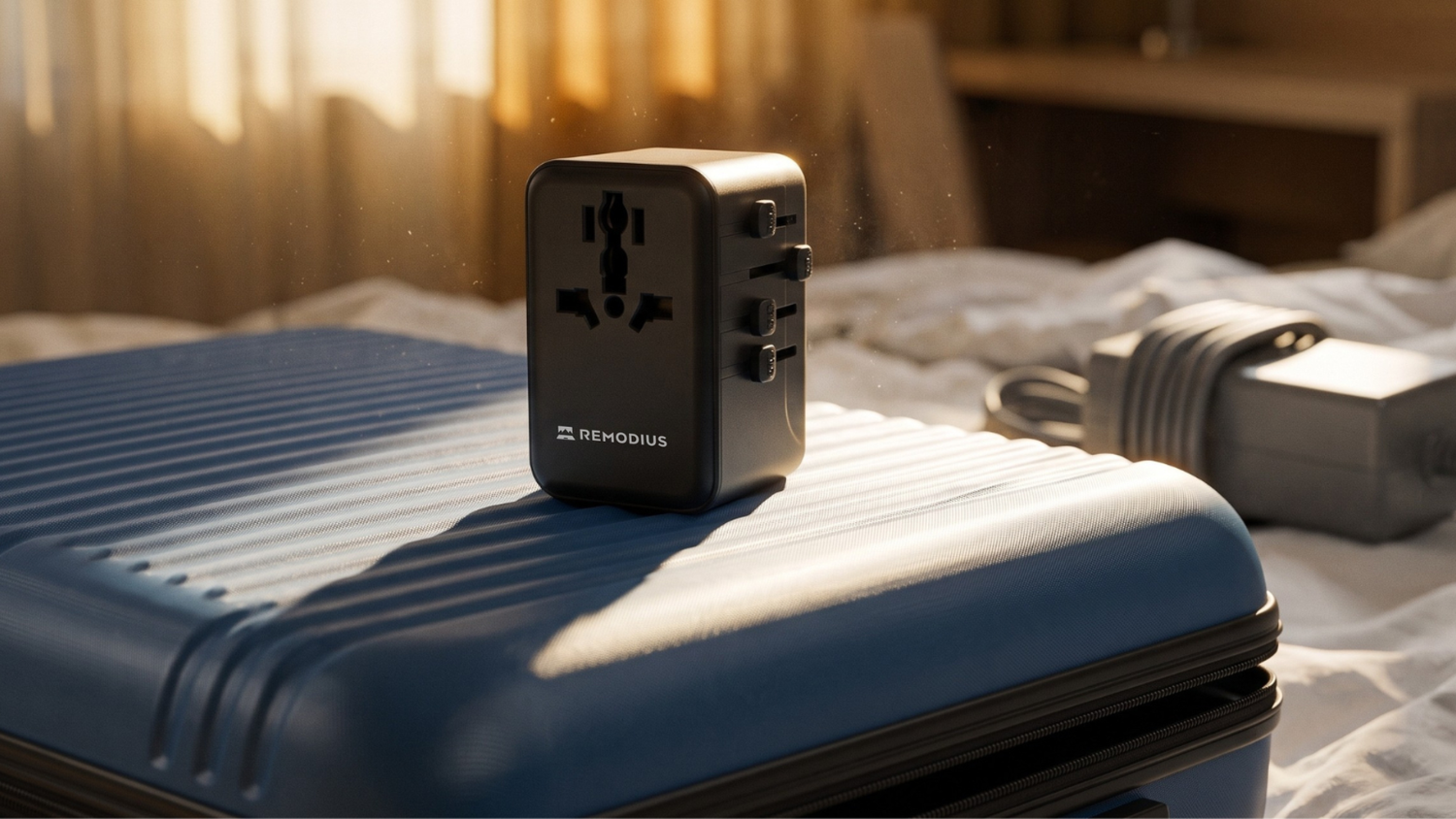
Many travelers assume a travel adapter is always enough. Sometimes that's true, but not always. In many countries, a Dutch plug simply won't fit the local outlet, which means you'll need a travel adapter. But there's something else to watch out for: the mains voltage.
For some devices, an adapter is all you need. For others, you'll need a voltage converter alongside your travel adapter. In this blog, we explain the difference, when a travel adapter is enough, and in which situations a voltage converter becomes essential.
What's the Difference Between a Travel Adapter and a Voltage Converter?
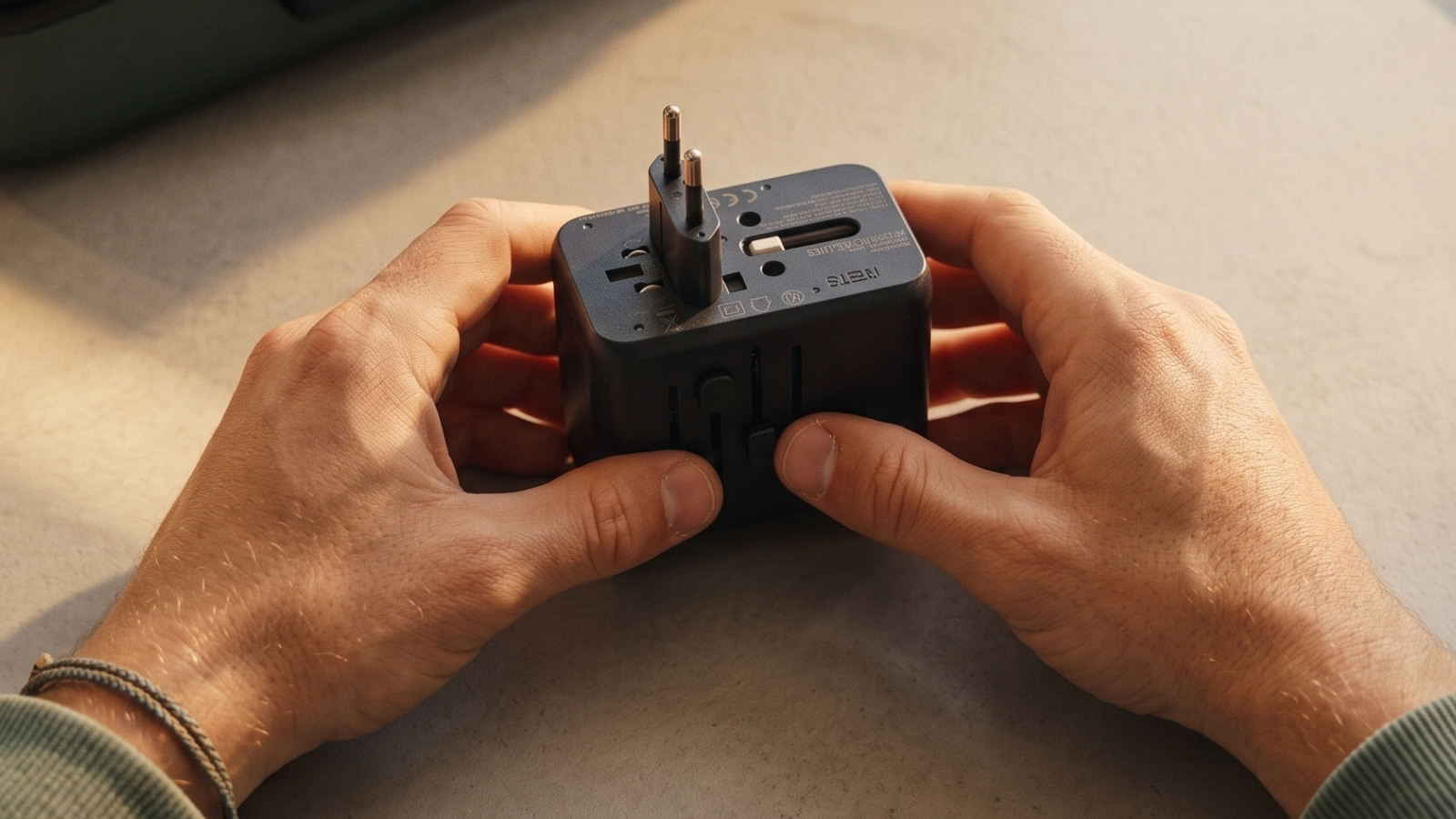
A travel adapter adjusts the shape of your plug to match the outlet of the country you're visiting. In other words, it makes sure your plug physically fits the socket.
A voltage converter does something different. It converts the voltage, for example from 110 volts to 230 volts or the other way around. That matters in countries where the mains voltage differs from what your device can handle.
In short:
- a travel adapter changes the shape
- a voltage converter changes the voltage
That distinction matters, because a device might fit the outlet perfectly and still not work safely if the voltage isn't right.
When Is a Travel Adapter Enough?
For many modern devices, a standard travel adapter is all you need. Think of:
- phone chargers
- laptop chargers
- tablet chargers
- camera chargers
- chargers for earbuds, smartwatches, and power banks
These devices usually come with an adapter or charger that supports multiple voltages. The label typically shows something like 100-240V. If you see that, the device can generally run on both 110V and 230V. In that case, you'll usually only need a travel adapter to get the right connection.
That's good news for most travelers, since electronics like phones and laptops usually don't require a voltage converter.
When Do You Also Need a Voltage Converter?
You need a voltage converter when your device isn't rated for the local voltage. This mostly applies to devices that draw a lot of power or generate heat, such as:
- hair dryers
- hair straighteners
- curling irons
- electric shavers
- kettles
- older devices without a universal power supply
If you're traveling to the United States or Japan, for example, you'll typically find a mains voltage of around 100 to 120 volts instead of the 230 volts we're used to in the Netherlands. Some devices won't work properly or will run underpowered. The reverse is also true: a device can get damaged if it receives too much voltage.
Not sure? Always check the label on your device or charger.
How Do You Check If Your Device Is Compatible?
The quickest way is to check the fine print on your charger or adapter. It usually lists the input voltage.
What You Want to See
If it says:
Input: 100-240V, 50/60Hz
Then your device is generally suitable for worldwide use, and you'll only need a travel adapter.
When to Be Careful
If it only says something like:
220-240V
Then the device is usually only suitable for countries with a voltage similar to the Netherlands. If you're traveling to a country with 110V or 120V, a voltage converter may be necessary.
Which Countries Does This Matter Most For?
The difference between a travel adapter and a voltage converter becomes especially relevant for destinations outside Europe. Think of:
- United States
- Canada
- Japan
- Mexico
- parts of Central America
- some countries in South America
In most European countries, the voltage is roughly the same as in the Netherlands, so you usually only need to check the plug shape. Outside Europe, you often need to check both: plug type and voltage.
If you visit a country page on Remodius, you can first check which plug type is used there. Then you can check whether your device can handle that voltage.
Why a Travel Adapter Doesn't Convert Voltage
This is probably the most common mistake. Many people assume a travel adapter automatically solves everything. But a standard travel adapter isn't a technical device that "adjusts" power. It's mainly designed as a mechanical adapter.
A travel adapter:
- makes the connection fit
- helps you use your plug in the local outlet
- usually doesn't convert 110V to 230V
That's why it's important not to confuse a travel adapter with a voltage converter.
Do Travel Adapters with a Built-in Converter Exist?
Yes, there are combination products on the market that pack an adapter and a converter into one solution. Still, it's smart to look closely, because not every "travel adapter with converter" is suitable for heavy-duty devices.
Some models are only intended for light electronics or have limited output. Others are bulkier, heavier, and less convenient to carry. For most travelers, a standard travel adapter or universal adapter is enough, since modern chargers are usually already compatible with 100-240V.
A combination solution mainly makes sense if you want to bring specific devices that don't automatically support multiple voltages.
Do You Need a Voltage Converter for a Phone or Laptop?
In most cases, no. Nearly all modern phone and laptop chargers support multiple voltages. That means you'll usually only need a travel adapter.
To be safe, check:
- your phone charger
- your laptop adapter
- your camera charger
- the charger for your e-reader or smartwatch
If you see 100-240V listed, you're generally good to go.
Do You Need a Voltage Converter for a Hair Dryer or Straightener?
This is where you need to be most careful. Hair dryers, straighteners, and other heat-generating devices tend to draw more power and aren't always designed for other voltages.
Some travel hair dryers have a dual-voltage setting, but many standard models don't. So don't automatically assume a travel adapter will be enough. For these types of devices especially, check in advance whether:
- the device is rated for 100-240V
- there's a voltage switch available
- a voltage converter is needed
For many long-haul trips, people choose to leave these kinds of devices at home or use a local alternative instead.
So What Do You Actually Need for Your Trip?
That depends on your device and your destination.
You Only Need a Travel Adapter
If:
- your plug doesn't fit
- your device supports 100-240V
You Need Both a Travel Adapter and a Converter
If:
- your plug doesn't fit
- and your device doesn't support the local voltage
Sometimes You Need Nothing At All
If:
- you're traveling to a country with the same plug type
- and the same voltage
Practical Checklist Before You Leave
Before you leave, it's best to check three things:
- which plug type your destination uses
- which voltage that country uses
- whether your device supports that voltage
That way, you won't discover at your destination that your charger fits but doesn't actually work properly.
Conclusion: Travel Adapter or Voltage Converter?
A travel adapter and a voltage converter don't do the same thing. A travel adapter makes sure your plug fits the outlet. A voltage converter makes sure the voltage is adjusted when your device can't handle it as is.
For phones, laptops, and many modern chargers, a travel adapter is usually enough. For hair dryers, straighteners, and older devices, you'll want to pay closer attention. Always check the voltage on your device before you leave.
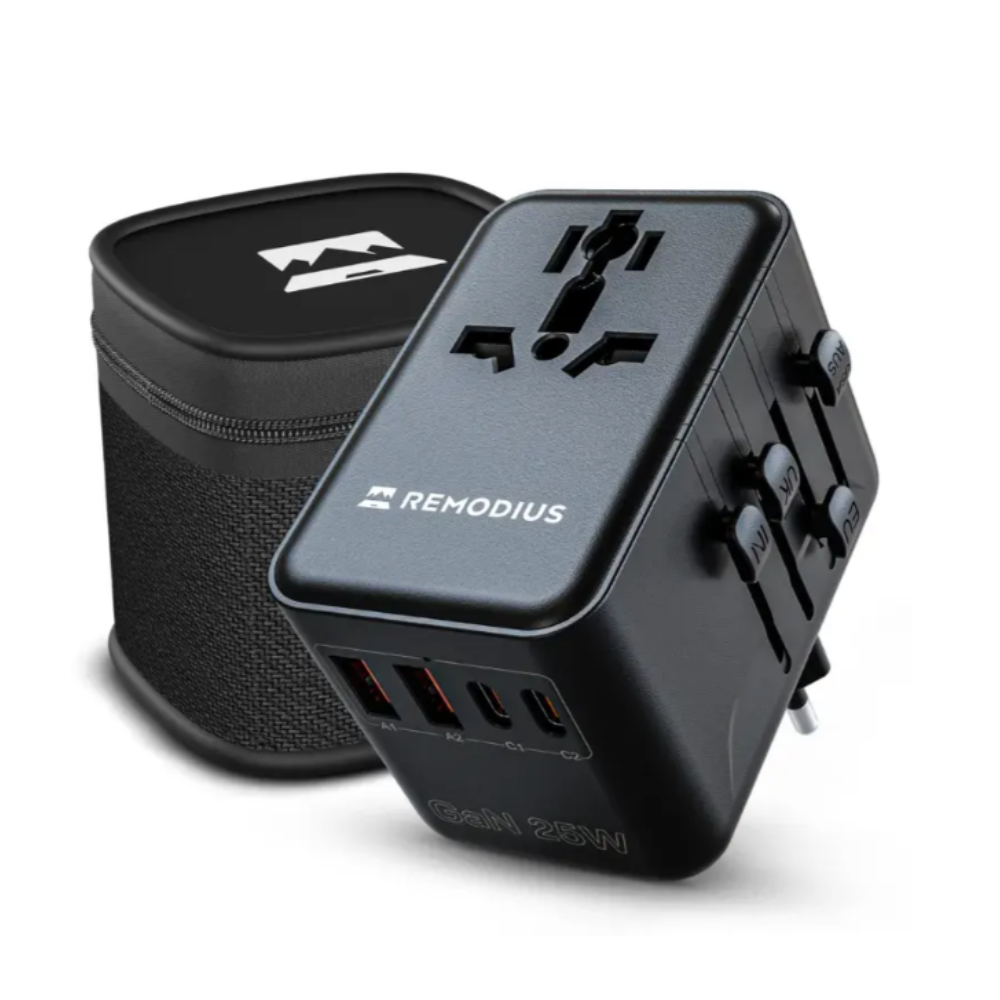
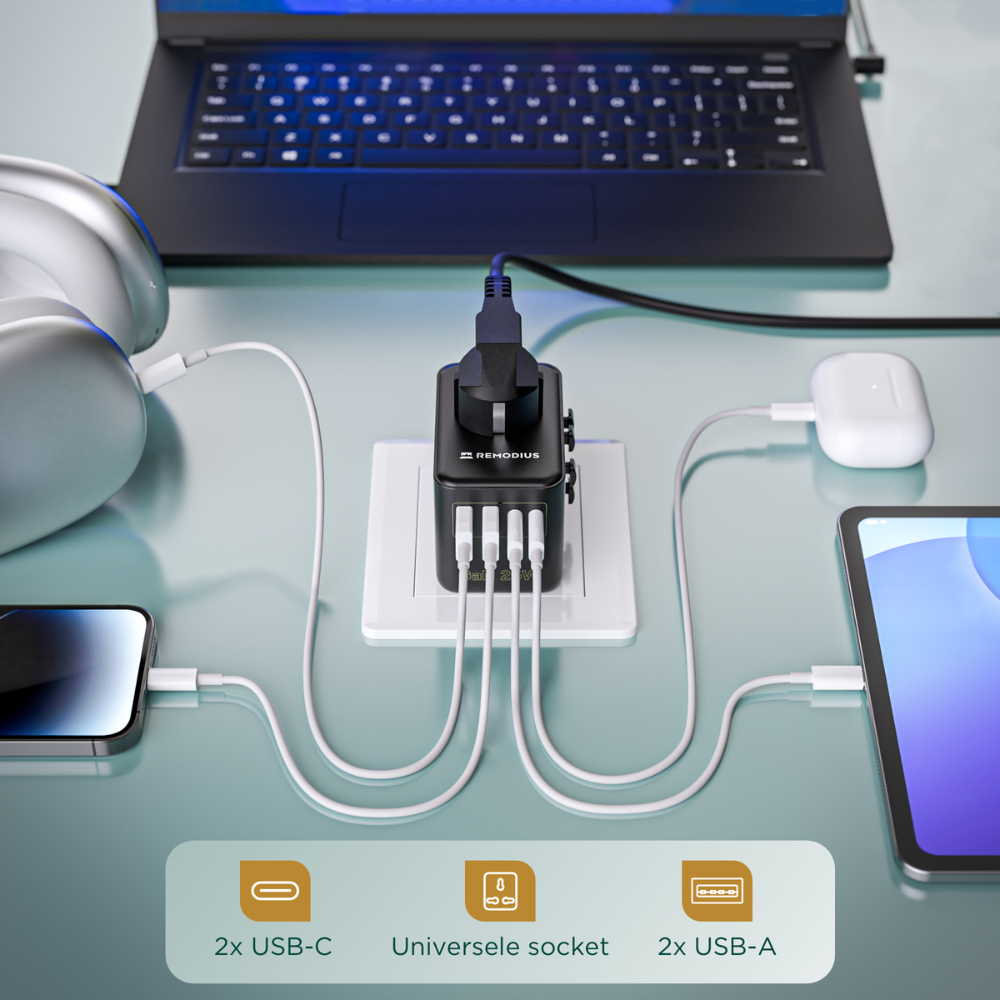
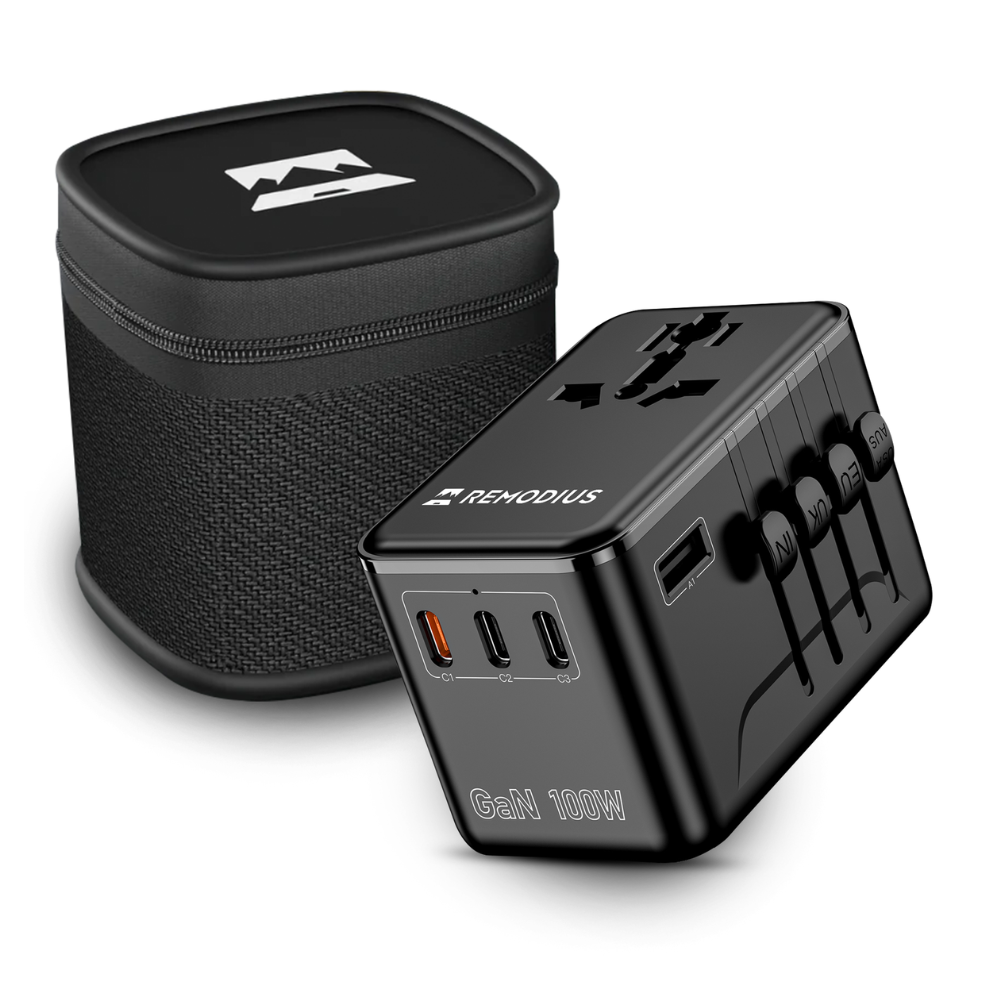
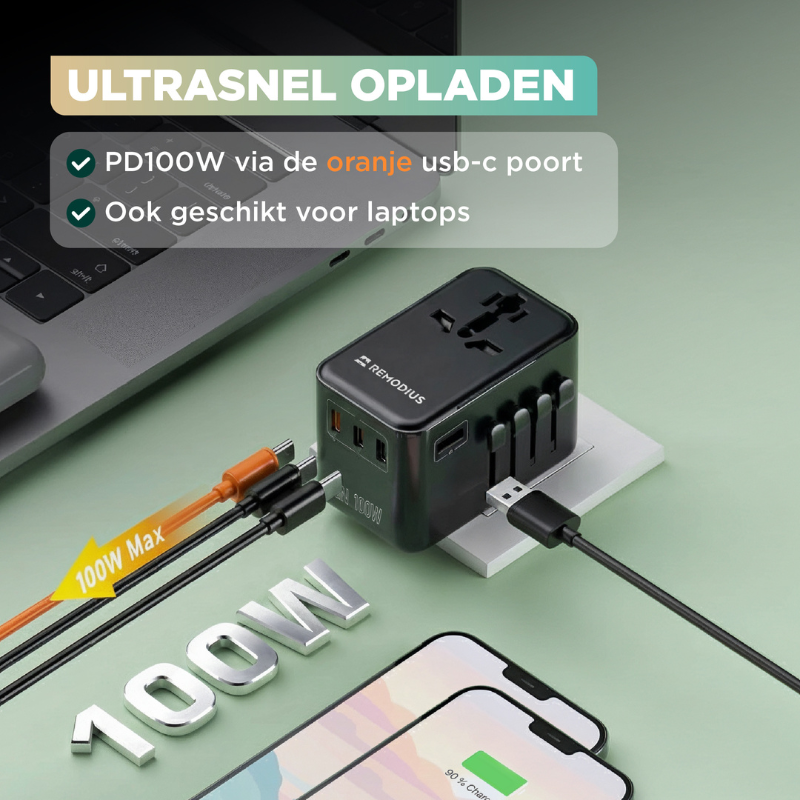
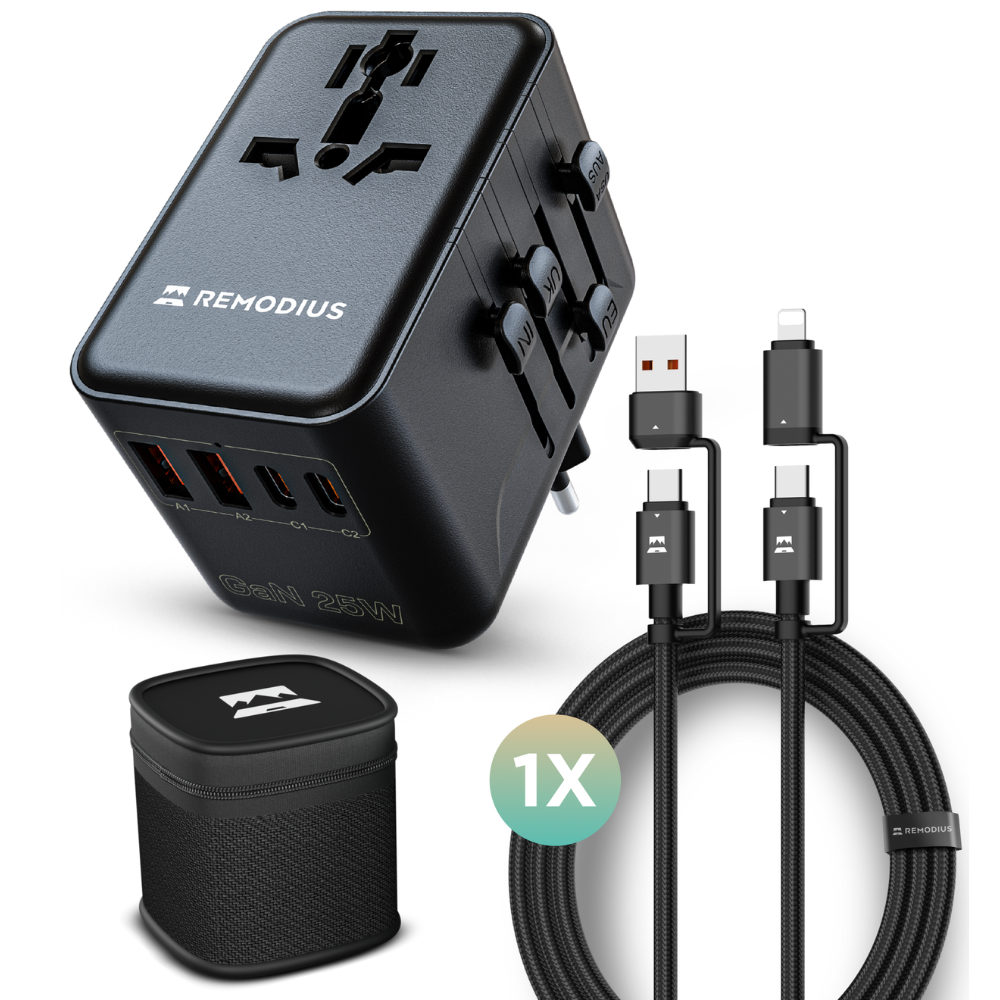
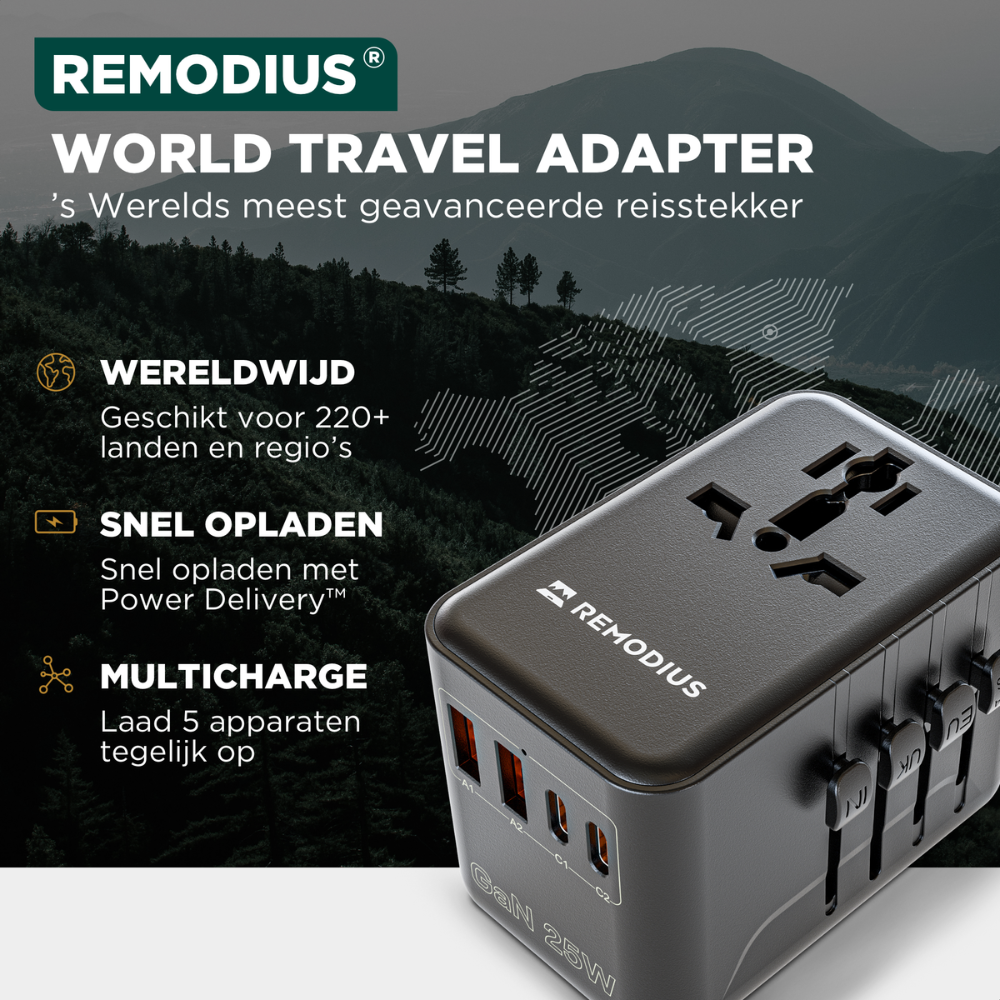
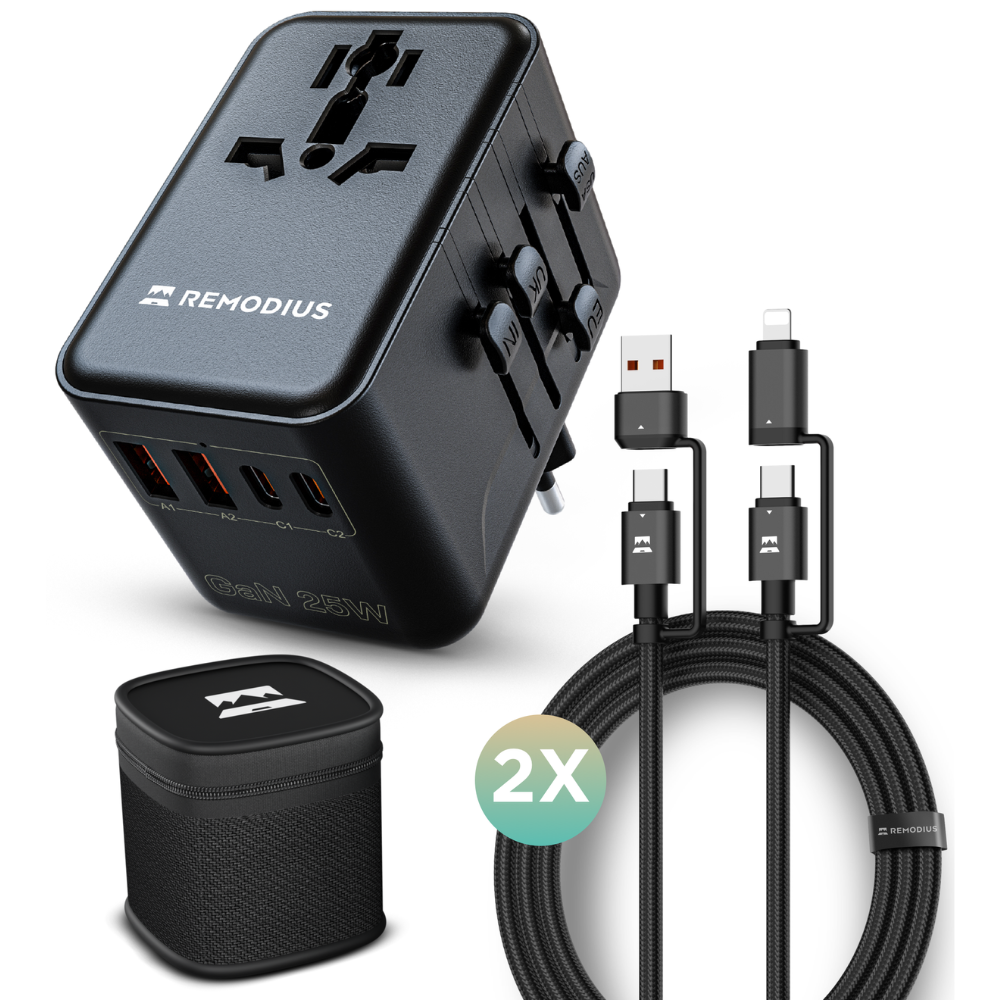
Looking for a practical solution for multiple destinations? Check out our universal adapter collection. And if you'd like to know which type of connection your destination uses, you can browse from this blog to the categories by country and by plug type.




Leave a comment
This site is protected by hCaptcha and the hCaptcha Privacy Policy and Terms of Service apply.