


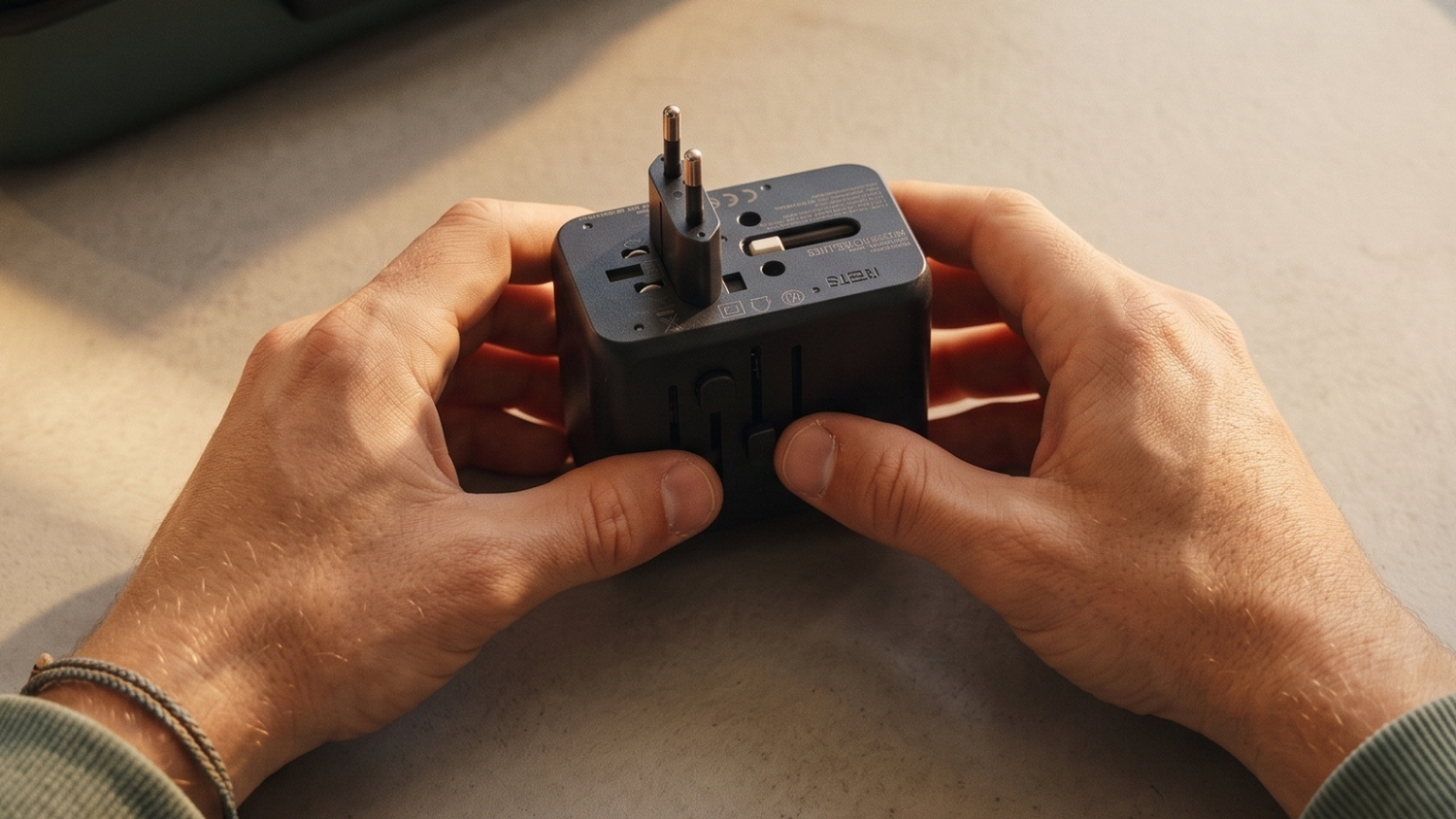
Traveling outside Europe often means discovering at the last minute that your charger doesn't fit the outlet. That's exactly when a travel adapter comes in handy. But what is a travel adapter, exactly, how does it work, and when do you really need one?
In this article, we'll break it down simply. You'll learn exactly when a travel adapter comes in handy, how it differs from a worldwide adapter, and what to look for when choosing the right adapter for your destination.
What Is a Travel Adapter?
A travel adapter is a device that lets you plug your device into a foreign outlet. That's because the shape of outlets differs from country to country. What works in the Netherlands won't automatically fit an outlet in, say, England, Japan, South Africa, or the United States.
In other words, a travel adapter mainly changes the shape of the connection. It makes sure your Dutch plug fits into a foreign outlet.
That also means something important: a travel adapter usually doesn't change the voltage of the power supply. We'll come back to that later.
Looking for a general solution that covers multiple destinations? Then a worldwide adapter is usually your best bet.
How Does a Travel Adapter Work?
How it works is actually very simple. On one side of the travel adapter, you plug in your charger, laptop, or other device. On the other side is the plug that fits the outlet in the country you're traveling to.
Think of it as the link between your device and the foreign outlet. The travel adapter makes sure the pins and shape of the plug match the local system.
If you're traveling from the Netherlands to the United Kingdom, for example, you'll usually need an adapter for a British outlet. Traveling to the US or Japan often means you'll need a different type again. That's why it's smart to check in advance which plug type your destination uses.
What a Travel Adapter Does and Doesn't Do
A travel adapter does one thing very well: it creates a physical connection between your plug and a foreign outlet.
What a travel adapter does:
- makes sure your plug fits a different type of outlet
- makes it easier to use your phone, laptop, or charger abroad
- helps you avoid running out of power while traveling
What a travel adapter usually doesn't do:
- convert the mains voltage from 110V to 230V or vice versa
- protect your device if it isn't suited to a different voltage
- automatically support every plug type in the world, unless you're using a universal model
That's why it's wise to look not only at the plug shape, but also at your device's voltage.
When Do You Need a Travel Adapter?
You need a travel adapter as soon as your device's plug doesn't fit the outlet in the country you're visiting. Within many European countries, you can simply use your Dutch plug, but outside Europe that's often different.
Destinations where a travel adapter is often needed include:
- England and Ireland
- United States and Canada
- Japan
- Thailand
- Sri Lanka
- South Africa
- Australia
- India
For destinations like these, it's a good idea to check beforehand which type of outlet each country uses. Our category pages by destination let you find that much faster than trying to figure it out at the airport.
What Does a Travel Adapter Look Like?
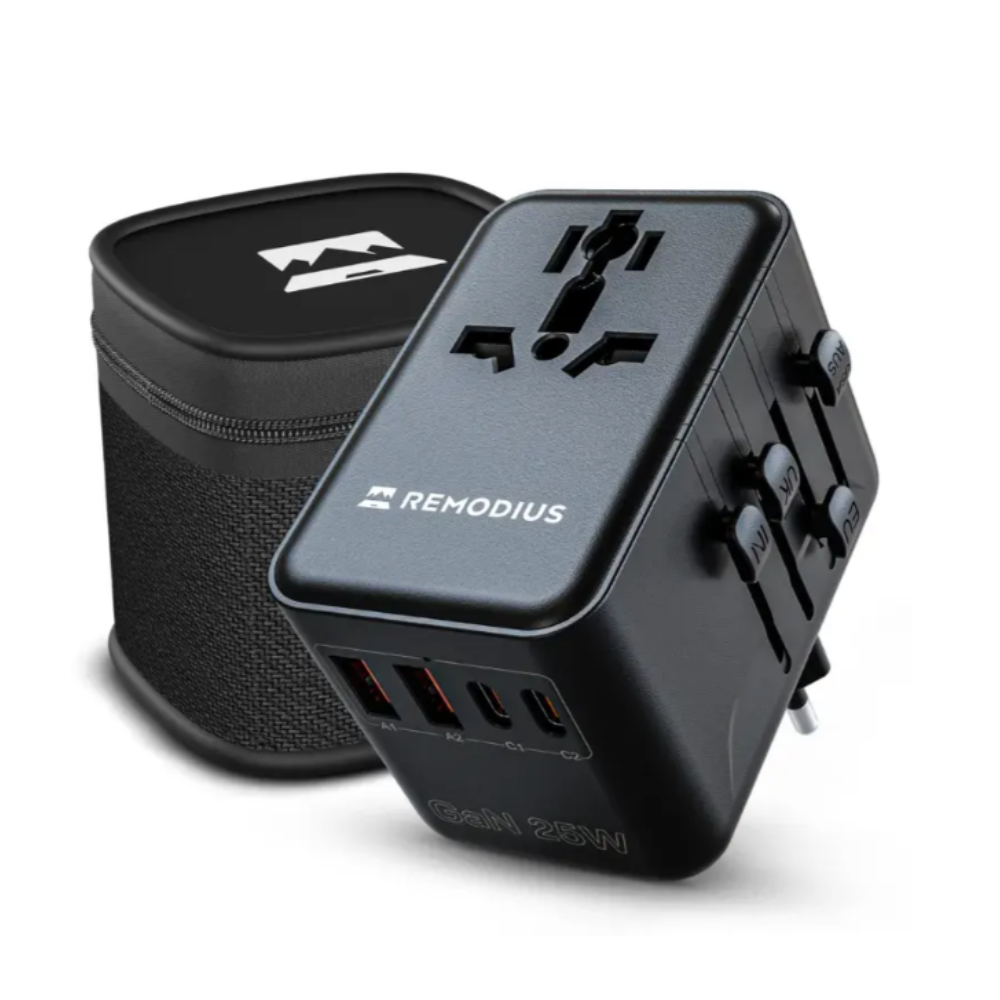
A travel adapter is usually compact and lightweight. Some models are very simple and designed for one specific country. Others are universal and feature retractable pins or multiple connection options.
Broadly speaking, there are three types:
- simple, country-specific adapters
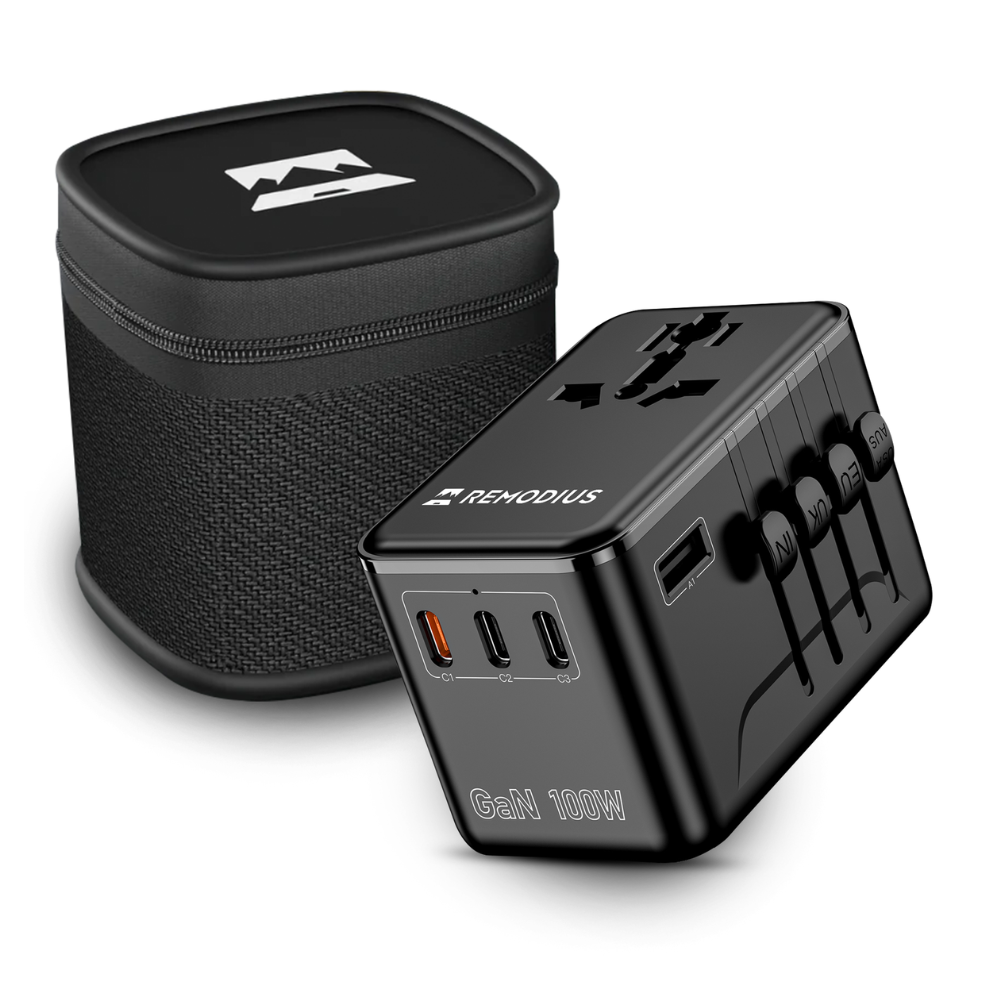
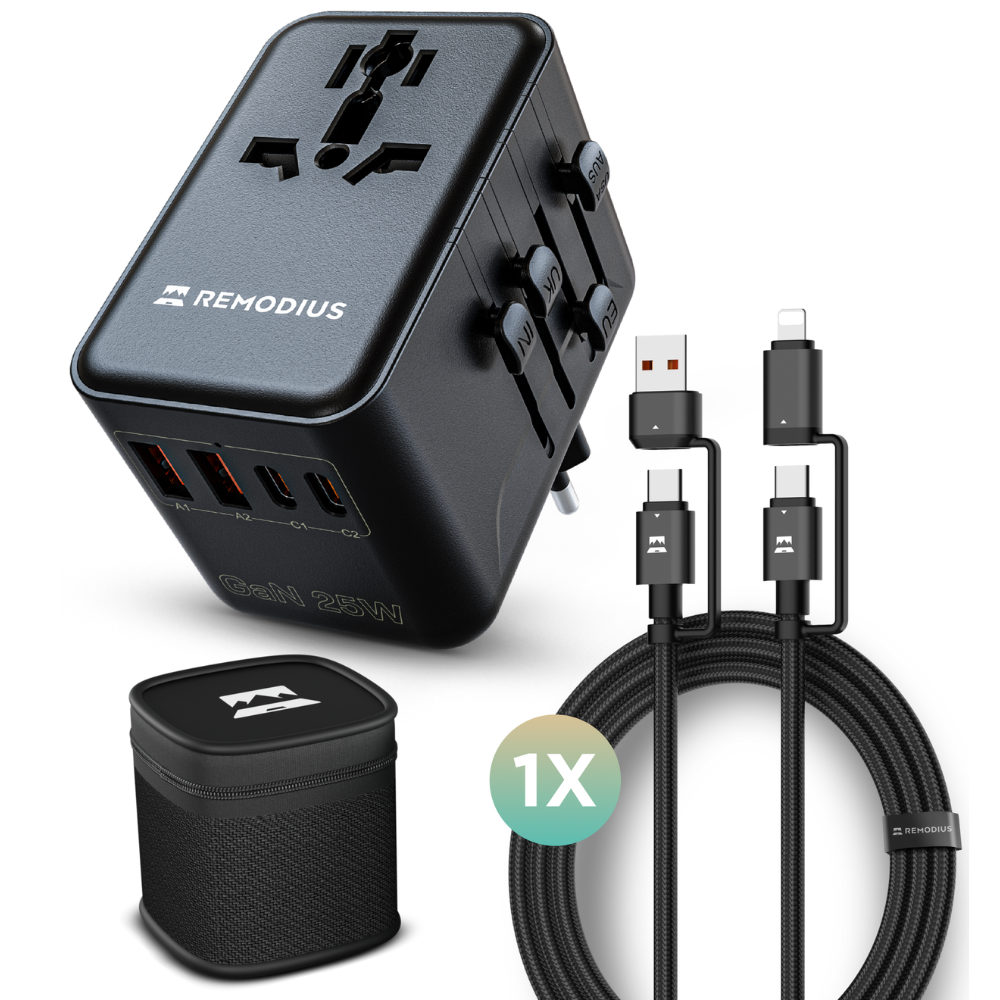
- universal travel adapters for multiple countries
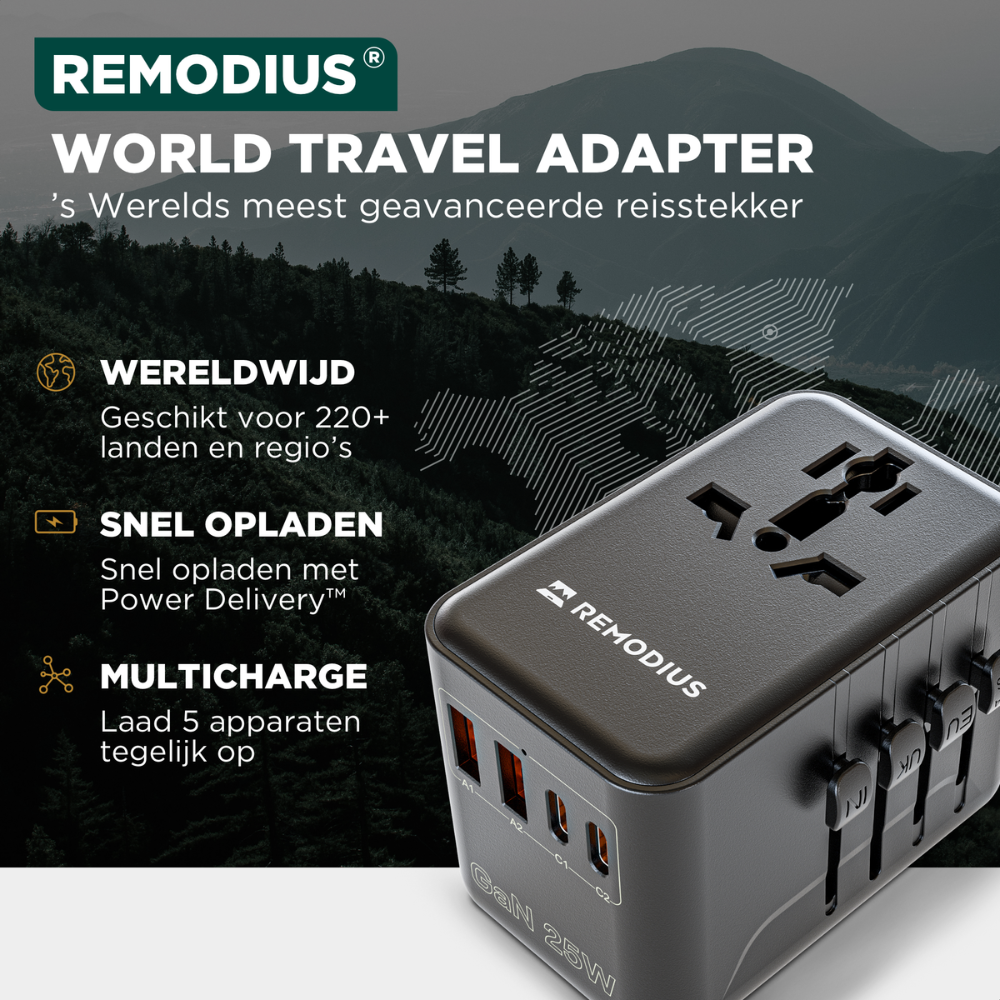
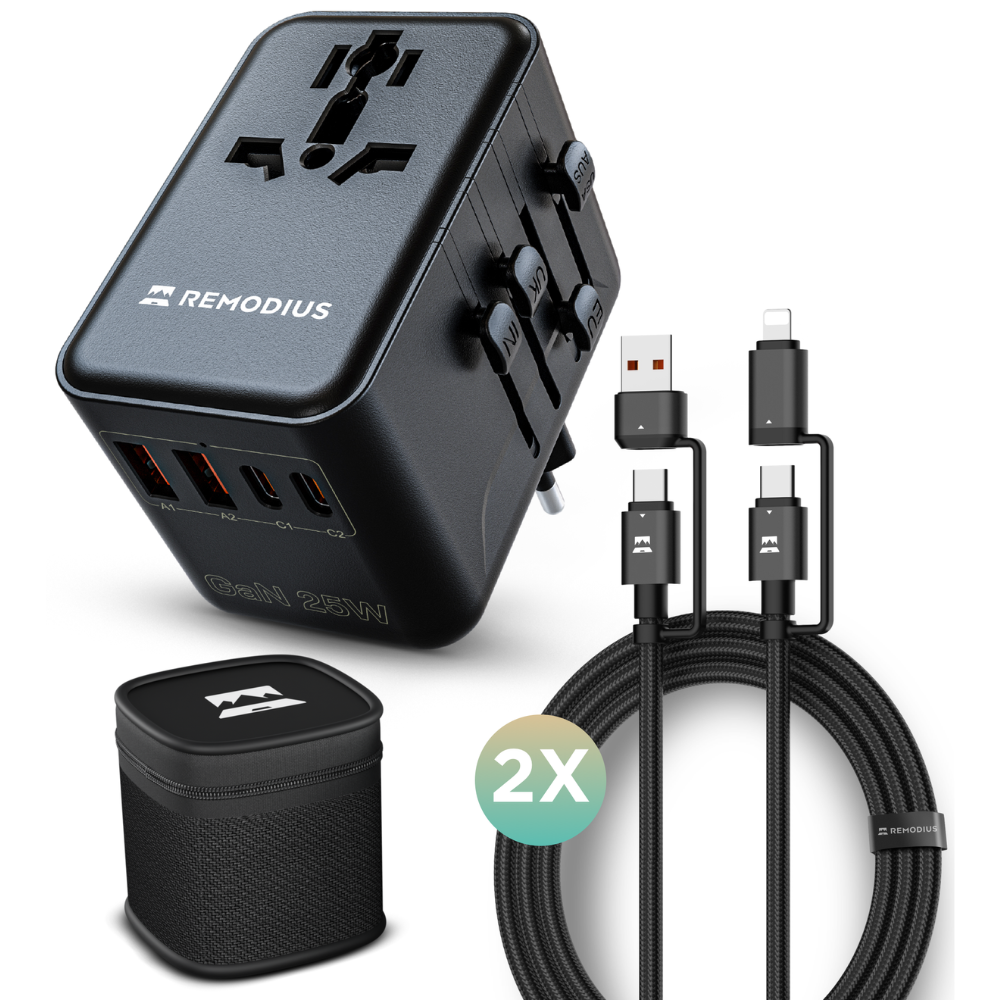
- travel adapters with extra features, such as USB or USB-C ports
A simple adapter is often small and handy if you're only traveling to one country. A universal model is more practical if you travel often or visit multiple countries.
Which Travel Adapter Do I Need?
That depends on two things: your destination and your device.
First, look at the country you're traveling to. Each country uses one or more plug types. England, for example, mostly uses type G, while the United States generally uses types A and B. In other countries, multiple types can be found side by side.
Next, look at your device. For a phone charger or laptop adapter, a regular travel adapter is usually enough, as long as the charger supports multiple voltages. For higher-power devices such as a hair dryer, straightener, or other heat appliance, you'll need to check extra carefully whether the voltage is compatible.
Anyone traveling to several countries often chooses a universal solution from the category worldwide adapter. If you're traveling to one specific destination, a country- or type-specific adapter is usually enough.
Travel Adapter or Worldwide Adapter: What's the Difference?
The term "travel adapter" is often used as an umbrella term, but in practice people sometimes mean a single adapter for one country and sometimes a universal adapter for multiple countries.
A standard travel adapter is usually suited to one specific connection. A worldwide adapter is designed to work in multiple countries and often features different sliding or click-in systems.
Want to know the exact difference? Read our blog on the difference between a travel adapter and a worldwide adapter.
Do You Also Need a Voltage Converter?
This is a question many travelers forget to ask. A travel adapter changes the shape of the plug, but usually not the voltage. In the Netherlands, we typically use 230V. In countries like the United States or Japan, that can be different.
Many modern chargers for phones, laptops, tablets, and cameras can handle both 110V and 230V. This is usually printed on the adapter, for example as “100-240V.” In that case, you only need a travel adapter.
If you're using a device that isn't rated for this, you may need a voltage converter. This is especially important to check with older or higher-power devices.
Travel Adapter With USB or USB-C: Handy or Not?
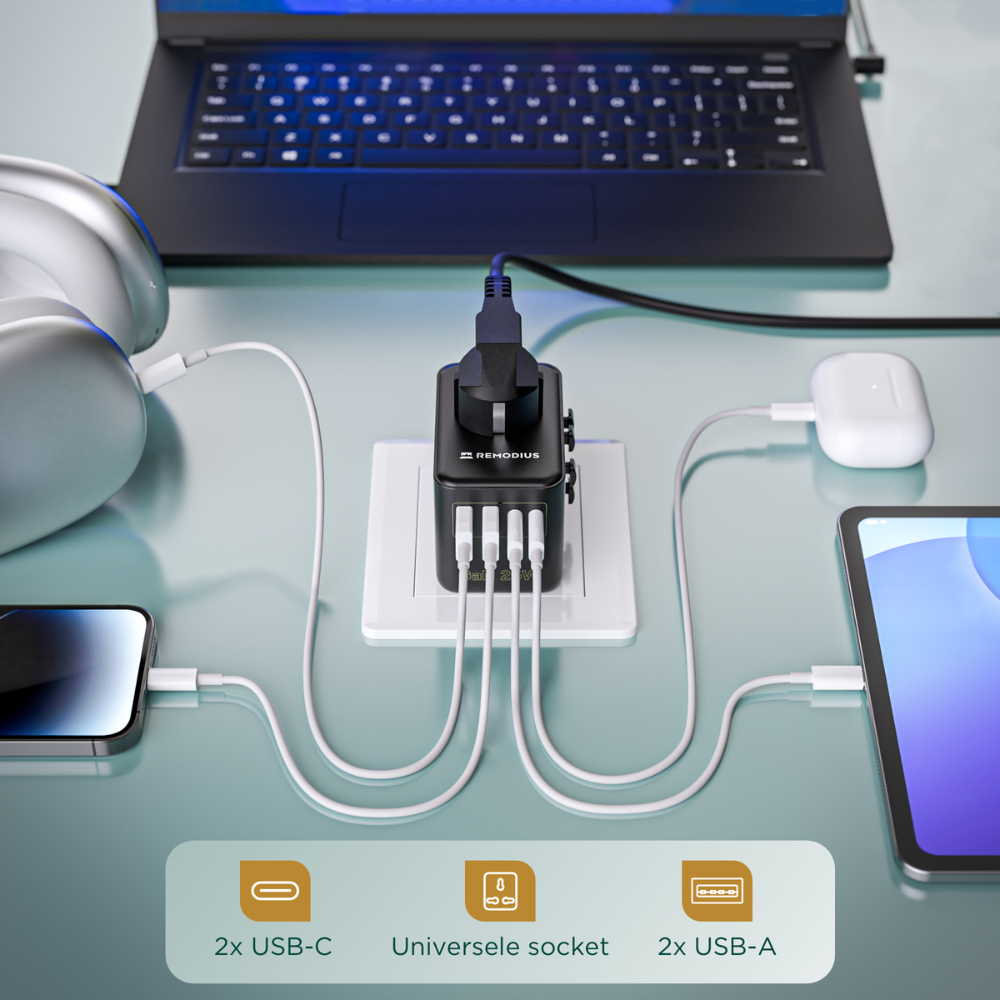
For many travelers, a travel adapter with USB or USB-C is extra convenient. It lets you charge multiple devices at once without packing separate plugs. This is especially handy for phones, earbuds, smartwatches, and power banks.
Still, it's smart to look beyond convenience alone. Also pay attention to:
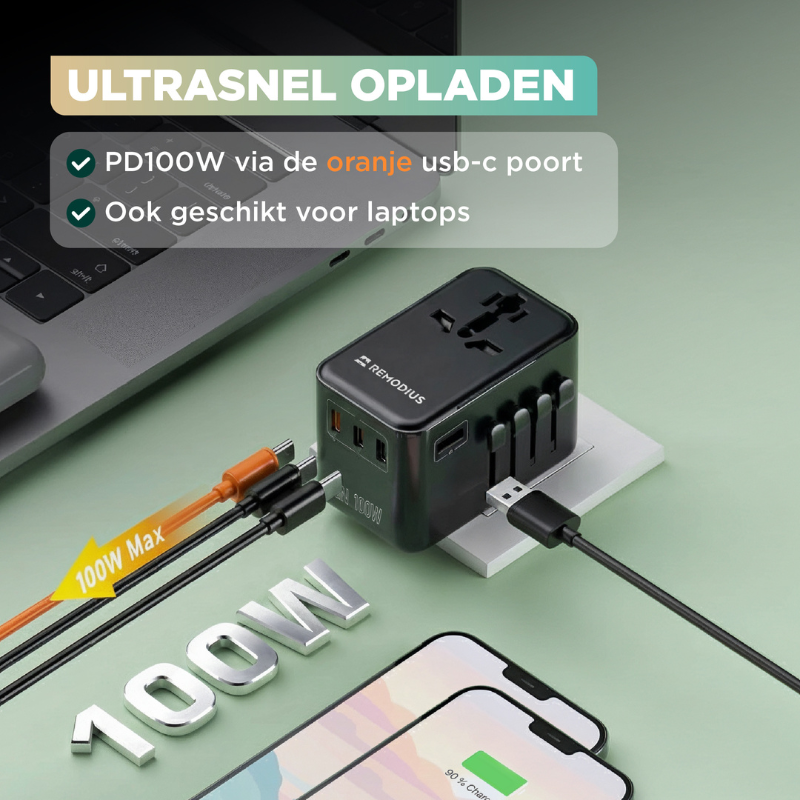
- the maximum charging power
- how many ports you need
- whether you also want to use a standard power outlet
- whether your device supports fast charging
For a weekend trip, a compact model is often enough. For longer trips or far-off destinations, a universal travel adapter with multiple ports is often more convenient.
What Should You Look For When Buying a Travel Adapter?
A good travel adapter isn't chosen on destination alone. Ease of use and safety matter too.
Key things to consider:
- which country or countries the adapter is suited for
- whether your device works on the local voltage
- whether you need a grounded connection
- whether you want extra USB or USB-C ports
- how compact the adapter is for your carry-on
If you travel often, a universal model is usually the smartest choice. If you're only heading to one specific destination, a simple country adapter may be enough.
Common Mistake: Assuming Every Plug Works Everywhere
One of the biggest misconceptions is that a charger with a “detachable cable” automatically works everywhere. That's not true. Even if the charger itself supports multiple voltages, the plug still needs to fit the outlet.
That's why it's always smart to check before you leave:
- which plug type your destination uses
- whether your device supports 100-240V
- whether you need a single travel adapter or a worldwide adapter
That way, you avoid frustration at the airport, in your hotel, or on the first day of your trip.
Conclusion: What Is a Travel Adapter?
A travel adapter is a device that lets you use your Dutch plug in a foreign outlet. It makes sure the shape of the plug fits, but it usually doesn't convert the voltage. So how it works is actually very simple: it forms the link between your device and the outlet at your destination.
If you're traveling to one country, a specific adapter may be enough. If you travel more often or to multiple destinations, a worldwide adapter is often more practical.






Leave a comment
This site is protected by hCaptcha and the hCaptcha Privacy Policy and Terms of Service apply.