Do you need a travel plug for Peru?
Yes, in almost all cases.
Peru uses two plug types interchangeably: type A (two flat pins, the same as in the US) and type C (two round pins, the same as in the Netherlands). In practice, type A sockets are by far the most common, especially outside modern hotels.
In some newer hotels and lodges you also find combination sockets that accept both flat and round pins. But you can't count on that exception, certainly not in remote areas, smaller guesthouses or local accommodations.
A travel plug for Peru is necessary when you:
- bring Dutch chargers or electrical devices
- stay in hotels, hostels, lodges or guesthouses
- travel around the whole country, including Cusco, the Sacred Valley and the Amazon
- want to avoid being without power on location
Which type of socket does Peru have?
Peru uses two plug types:
- Type A: two flat parallel pins, the same type as in the US, Canada and Japan. This is by far the most common type in Peru
- Type C: two round pins, the same type as in the Netherlands and the rest of continental Europe
An important detail: American type A plugs often have two pins, one of which is slightly wider. Peruvian type A sockets usually only accept pins of equal width. So an American plug does not always fit into a Peruvian socket, while a universal world adapter avoids that problem entirely.
There can be regional differences. In Lima and large cities you more often find combination sockets, while in the countryside and remote lodges you usually only find type A.
Which travel plug for Peru is best?
The best choice depends on how you travel and what you bring.
For a one-off trip to Peru, a simple type A adapter is sufficient. With it you convert your Dutch plug to the right format.
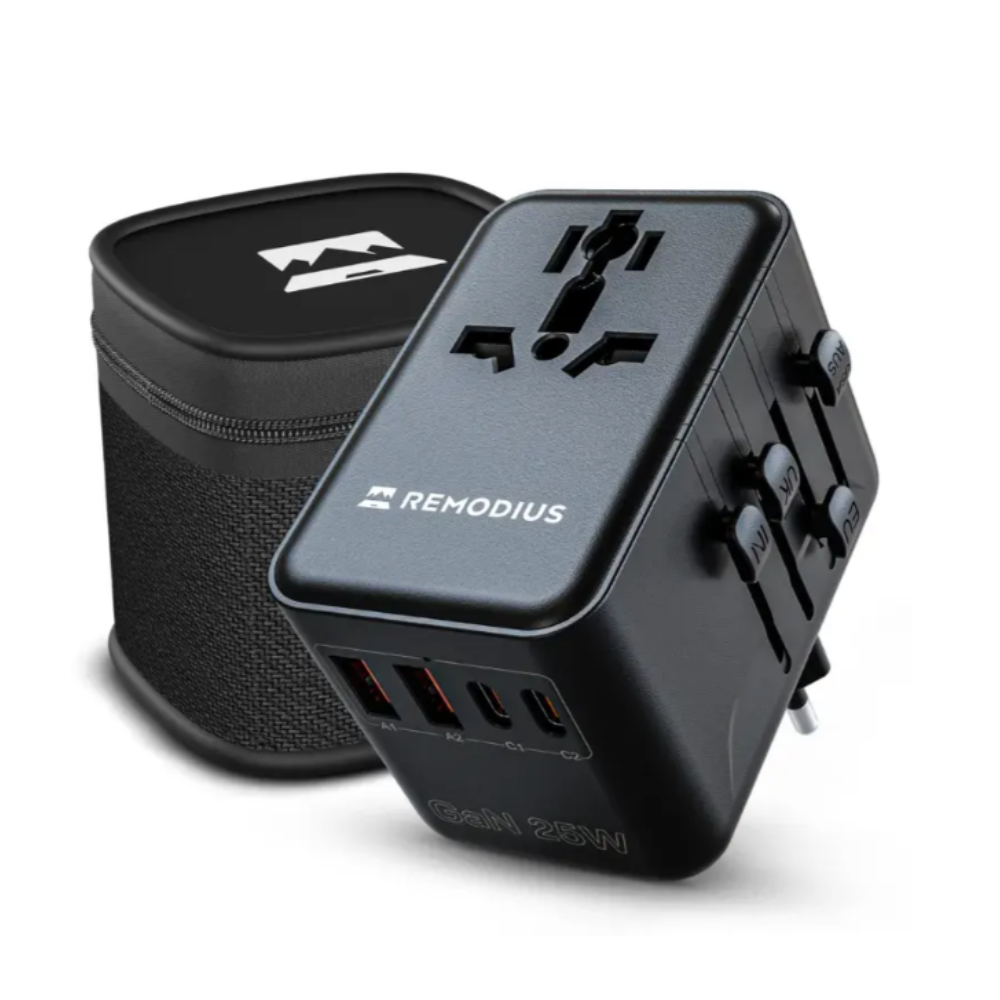
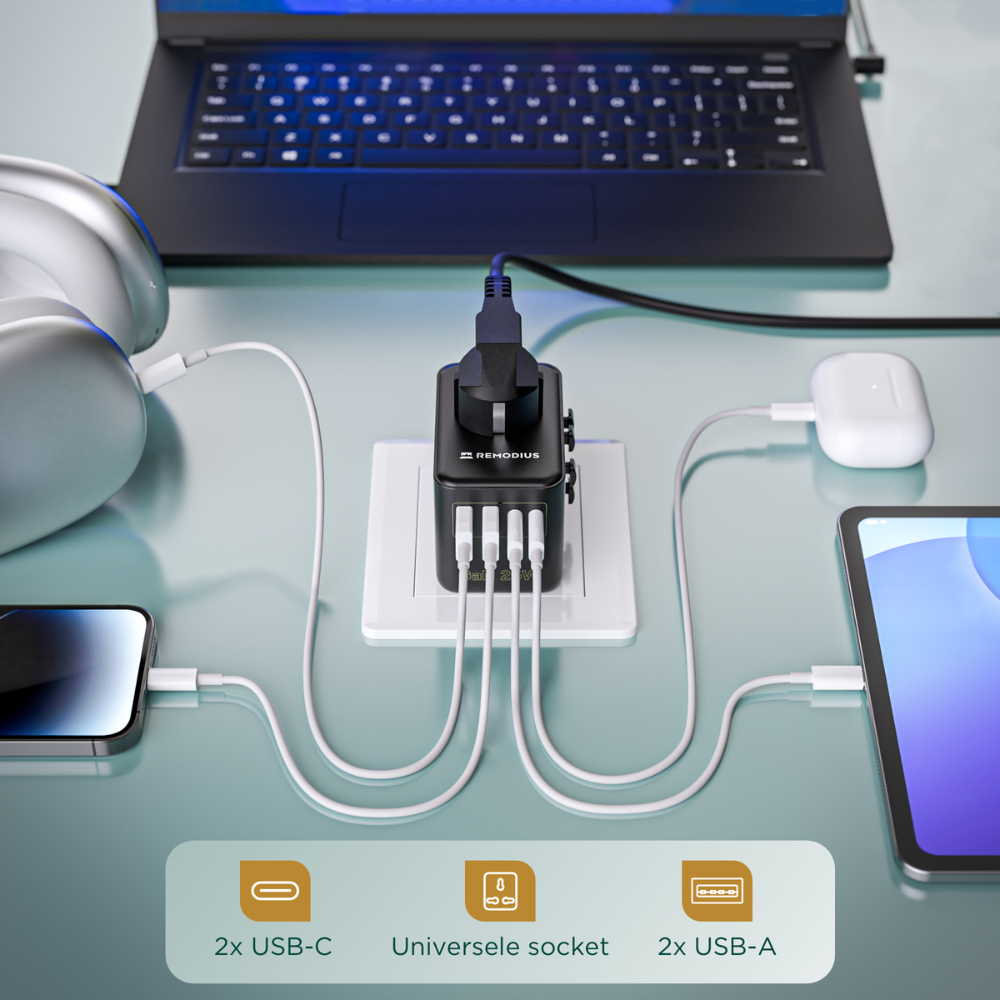
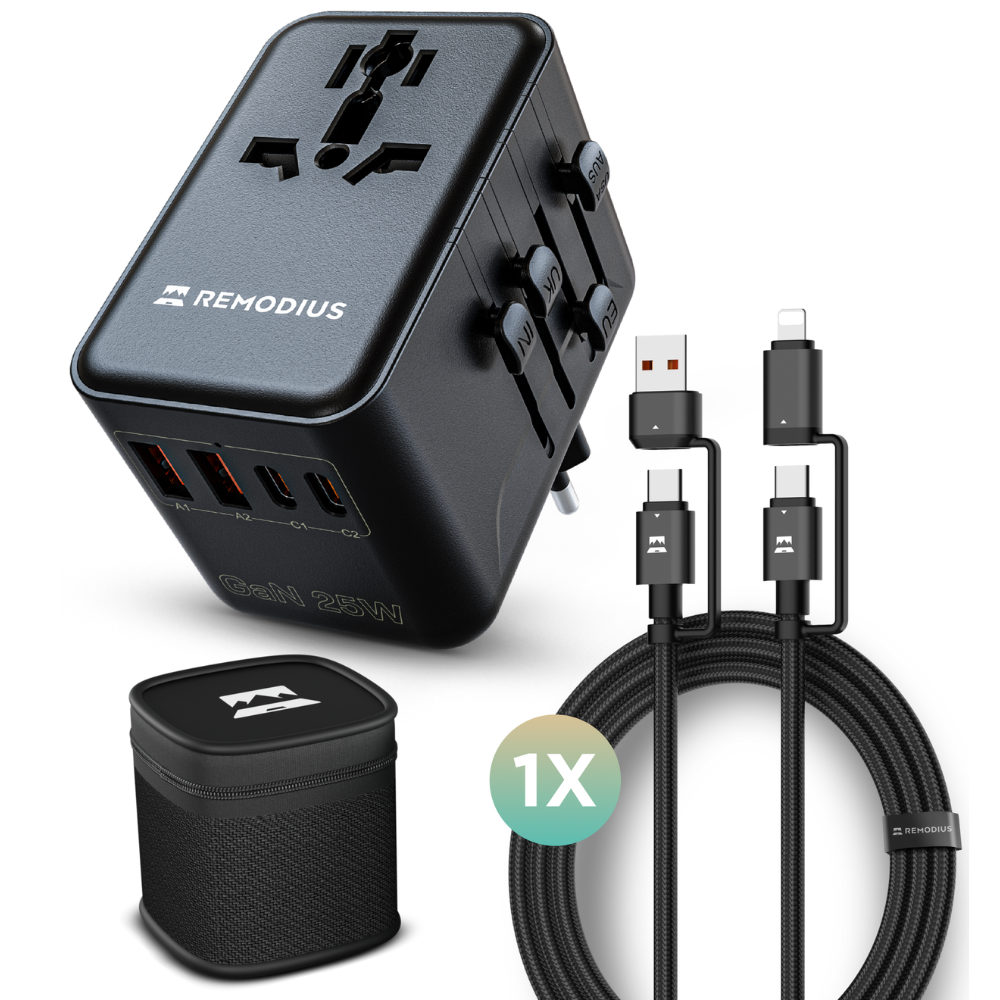
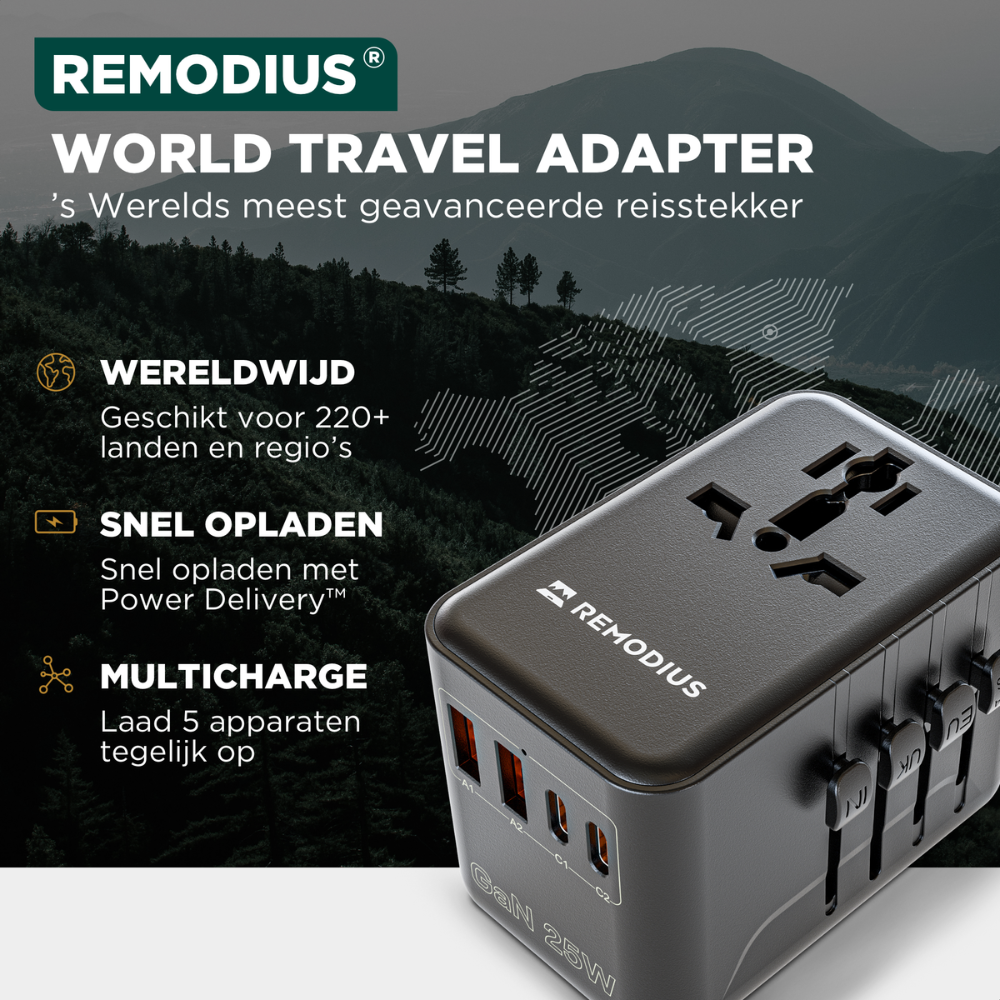
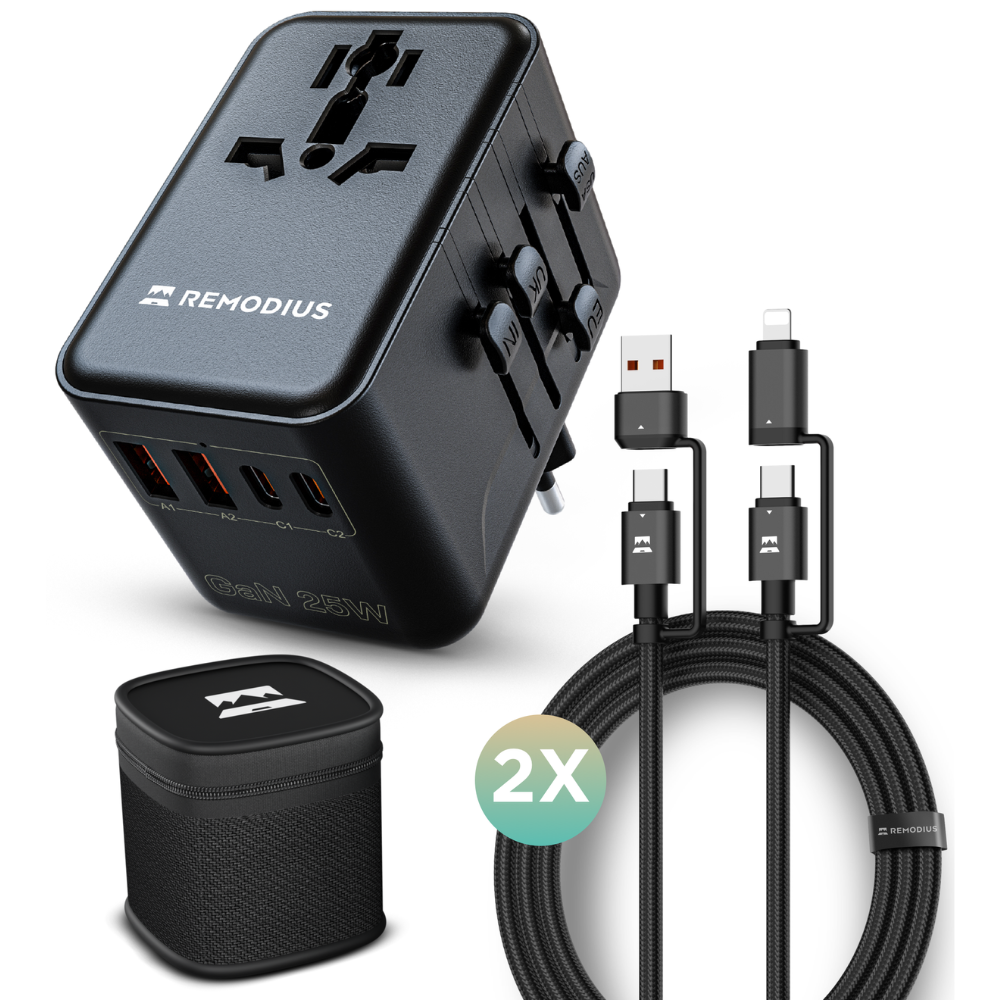
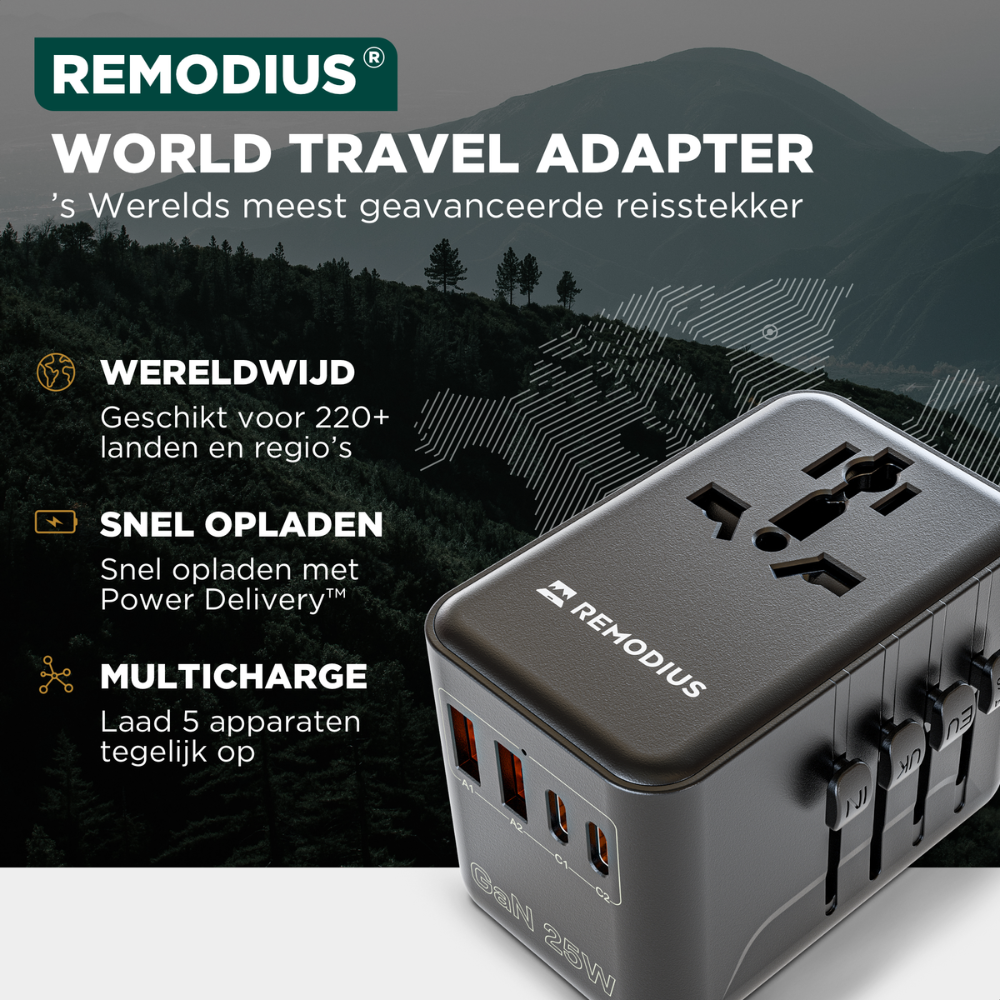
For travellers who visit multiple countries, a world adapter is the smarter choice. If you combine Peru with, for example, Bolivia, Chile, Brazil or a stopover via the US, you will encounter different sockets. The Remodius World Adapter works in Peru and in 220+ other countries, with multiple USB ports so you can charge your phone, laptop and camera at the same time.
When choosing a travel plug for Peru, pay attention to:
- support for type A sockets
- sturdy housing for varying socket quality
- built-in USB and USB-C ports
- compact size for hand luggage and day backpack
- sufficient power for laptops and larger devices
Power and voltage in Peru
The power supply in Peru differs slightly from that in the Netherlands.
- Voltage: 220 volts
- Frequency: 60 Hz
- Compatible with Dutch devices: usually yes
The difference in voltage (220V vs 230V) is negligible and not a problem for your devices. The frequency is different though: 60 Hz in Peru versus 50 Hz in the Netherlands.
For modern devices such as phones, laptops, cameras and power banks this makes no difference. They work on a wide range (100-240V, 50-60Hz). To be safe, check the small label on your charger. Devices with a motor or clock (older hairdryers, shavers, electric clocks) can be more sensitive to the frequency difference. For those devices a voltage converter or a new device is advisable.
When is a travel plug for Peru indispensable?
An adapter is indispensable in Peru when using:
- phone and laptop chargers
- camera and GoPro chargers
- electric toothbrushes
- power banks and portable batteries
- portable monitors for remote work
- headphones and earbuds with charging case
Especially if you take a trip around Peru, with overnight stays in both large cities and remote accommodations, a reliable travel plug is indispensable. In Cusco, the Sacred Valley, on the Inca Trail route or in the Amazon you cannot always count on modern sockets.
Buying a travel plug for Peru
Want to travel carefree and not depend on adapters on location? Then choose a reliable travel plug or world adapter suitable for Peru.
With the right adapter you avoid loose connections, non-working devices and unnecessary stress during your trip. Travelling onward after Peru, for example to Bolivia, Chile or Argentina? Then a world adapter works there too, because these countries use different plug types interchangeably.